Yes There Is an AI That Sends the Follow-Up Text so You Never Have to Draft It
Pencil handles the social awkwardness of nudging friends to actually commit to plans.
Pencil is an AI assistant that follows up on plans inside an iMessage group chat, sending the nudge and calendar invite without requiring someone to draft the follow-up. It addresses the real reason many plans stall, which is not a lack of interest but the social effort of asking again. The useful distinction is between software that reminds someone to act and an assistant that handles the coordination.
Why plans die in group chats even when everyone genuinely wants to go
A group chat has three enthusiastic replies and then silence. Everyone wants dinner, but nobody has proposed a date. The conversation has reached the point where agreement must become commitment, and that transition needs someone to act. Whoever sends the message to set a date takes on the job of moving the plan forward. It also means risking the feeling of being pushy, needy, or more invested than everyone else.
That hesitation gives social drift its opening. A person can keep responding warmly while no longer initiating, so the connection appears intact even as the effort to sustain it falls away. If both sides start waiting for the other to act, neither sends the next invitation. Eventually, saying “we should hang out” can become a polite ritual. The thread goes quiet without anyone deciding to end it.
This is structural friction. Everyone in a group can want to meet while no one is ready to take on the social work of getting them together. Enthusiasm answers whether people want to meet, while scheduling asks them to choose and commit. Those are different tasks. The failure occurs in the handoff between them. Another expression of interest therefore does not necessarily rescue the plan.
The follow-up text is harder to send than it looks
The obvious remedy is to send the nudge. Yet the longer a thread sits unanswered, the more decisions that short message seems to require. The sender has to decide whether to mention the delay, whether the earlier tone still fits, and whether the invitation is still open. A message that once needed only a proposed date now seems to need an explanation. Waiting increases the perceived cost of acting.
Guilt can make that cost compound. Someone knows a follow-up is due, postpones it, then feels worse about the delay and avoids the thread again. This is not simply a failure to remember. The obligation can stay fully present while the willingness to face it shrinks. Eventually, archiving the conversation can feel easier than reopening a plan that everybody originally welcomed.
A reminder intervenes at the wrong point in that cycle. It surfaces the unfinished task but leaves the sender to solve the wording and absorb the awkwardness. Snoozing the alert postpones the task while leaving its demands unchanged. The same problem appears in professional correspondence, whether the unfinished exchange concerns a meeting, a coffee catch-up, or finding a time after an earlier conversation.
A fixed template removes some typing, but the sender still has to decide whether it fits the relationship and the moment. What is missing is an assistant that can take on the social labor of turning an unfinished exchange into an appropriate next message.
What separates a true follow-up AI from a reminder or a template sequence
A true follow-up AI uses the conversation to determine what to say next. It identifies an unanswered thread, drafts a message grounded in what was actually said, and sends it or queues it for review. The thread supplies the context for the message. This distinguishes the category from a reminder, which returns the task to the user, and a pre-written sequence, which automates delivery without adapting to the exchange.
Pre-written sequences have a place in cold outreach. Their limitation in personal coordination is that a standard message cannot reliably reflect the relationship, the conversational register, or the point where a particular plan stalled. A dinner thread needs more than an automated send time. The system must connect its nudge to the unresolved decision rather than merely announce that another interval has passed.
Within AI-assisted follow-up, autonomy is the central design choice. Manual mode identifies quiet threads and leaves sending to the user. Copilot mode drafts and queues a message for approval before anything leaves. Autopilot mode sends within user-set bounds, with review and undo available. These modes differ in how much judgment they hand over as well as how much typing they do.
A tool that finds unfinished conversations can help without taking over follow-up, while a drafting tool can give the user words to work with without taking permission to speak for them. Automatic sending goes further. It requires confidence not only in the wording, but also in the circumstances under which the assistant acts and stops.
Why tone and timing determine whether a follow-up feels like care or spam
The objection to automated personal messages is reasonable. A recipient may read the nudge as evidence that software remembered and doubt that a friend thought of them. Automation can also make a small annoyance repeatable, especially when messages ignore the conversation they claim to continue. Personal follow-up therefore takes more than writing that reads well. It needs relevance, restraint, and an answerable question.
Voice-matching helps with the first part of that task. A capable assistant reads the user's message length, formality, openings, and cadence instead of substituting a generic conversational style. Grounding the draft in the actual thread provides the substance. Together, these mechanisms can produce a message that follows naturally from what came before, rather than a polished interruption that happens to use the recipient's name.
Timing and specificity reduce the recipient's work as well. Asking whether Saturday still works or whether another day would be better gives the person a concrete decision. A vague check-in leaves them to reconstruct the unfinished plan and invent the next step. The useful nudge is small and low-stakes. It asks for enough information to move the conversation forward without turning the invitation into an obligation.
Still, good phrasing does not establish that a message is authentic. The stronger distinction is between the intent to maintain a connection and the friction of acting on that intent. An assistant can remove the latter without originating the former, provided its actions remain within the user's wishes. The value then comes from follow-through.
Where AI follow-up currently lives in email and the gap it leaves in texting
Most AI follow-up tools in 2026 are built around email inboxes or commercial sales pipelines. That makes them useful for specific communication tasks, but not interchangeable with an assistant for personal group chats. The channel determines where the system can see unfinished work and act on it. A tool designed for email correspondence does not, by itself, solve coordination inside Messages.
alfred_ tracks unanswered threads across Gmail, Outlook, and IMAP accounts and drafts follow-ups from the thread itself. The user reviews and sends the result. This fits work emails and exchanges to find a time to meet, including threads left unfinished after meetings.
HighLevel's Conversation AI Auto Follow-Up detects inactive contacts and drop-off scenarios, schedules and sends follow-ups, and switches channels dynamically. Its purpose is commercial lead coordination. Thoughtly, Kixie, and Aloware also serve business needs through voice agents and SMS follow-up, including call-then-text workflows for revenue teams.
Retell AI enables voice agents to send and receive SMS during or after calls, supporting confirmations, booking links, and re-engagement. That is enterprise infrastructure requiring setup outside the native Messages experience. Commercial workflows, inbox tools, and personal group chats call for assistants suited to their different demands.
A new kind of tool instead puts the assistant inside the phone's Messages app. When the plan forms in a text conversation, moving coordination to a dashboard, workflow, or separate interface creates another handoff. Native messaging offers a way to handle that unfinished work where it already exists.
How does an iMessage-native AI follow up on plans without anyone leaving the conversation?
Scheduling inside iMessage keeps the coordination next to the conversation that gives it meaning. Pencil lives in the group chat itself, so a developing plan does not require participants to open another tool or share a booking link. The assistant is already where the discussion happens. That placement is the design choice behind its follow-up function, rather than a separate convenience added after scheduling.
Participants see when someone is free while the event details behind that availability remain private. Pencil can therefore help identify a time without making the contents of each person's calendar part of the group conversation. Coordination needs an opening in the schedule. It does not need an explanation of every occupied hour.
Pencil also keeps editable contact preferences, allowing timing and other preferences to inform coordination without asking the same questions repeatedly. That memory serves a limited practical purpose. In a recurring social context, this makes the assistant more useful without requiring every new plan to begin from the same set of questions.
When initial enthusiasm gives way to silence, Pencil can send the follow-up in the register of the conversation. This is the intervention the stalled thread needs. No one has to take on the job of always chasing people just to ask whether the plan is still going ahead. Follow-ups can also be disabled in settings for people who prefer to handle that part themselves.
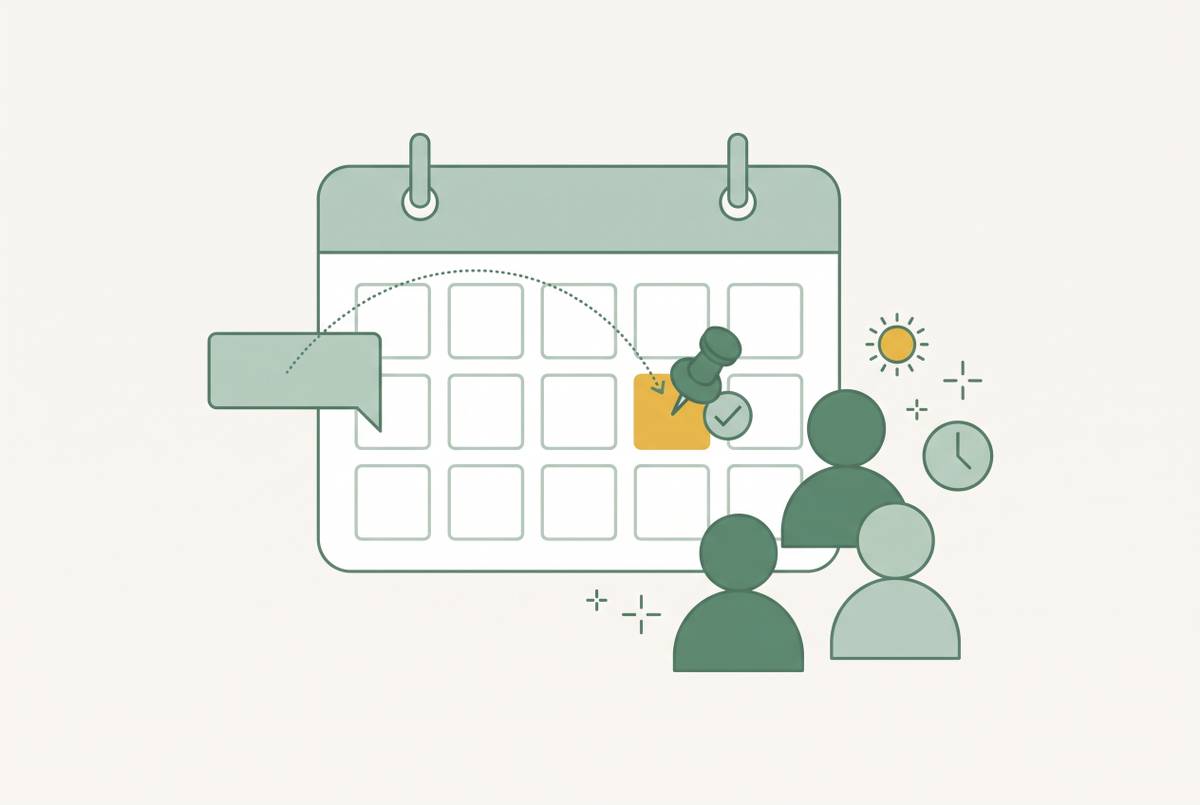
Once the time is settled, Pencil sends the calendar invite and steps back. Its intended role ends with the coordination rather than expanding into a persistent presence in the chat. The resulting experience is concrete. An exchange that could have remained an agreeable possibility has become a scheduled occasion, with the conversation free to return to the people in it.
What to watch for when any AI sends messages on your behalf
Any assistant allowed to send personal messages should be evaluated on its boundaries, including Pencil. Seeing an assistant write good messages is not enough to trust it. The more important questions concern permission, memory, disclosure, and stopping behavior. The assistant must get these right to act usefully without making commitments or exposing information the user did not intend.
The first test is cancellation when a recipient replies. Every pending follow-up on that thread must cancel immediately, because a nudge sent after an answer exposes a basic failure to track the exchange. Ask explicitly how and when the queue clears. That question distinguishes an assistant responding to a conversation from a sequence continuing on its own timetable.
Relationship memory deserves equally close scrutiny. Past conversations can improve personalization, but mistaken inferences and outdated preferences can also shape future messages. The relevant test is whether the user can inspect and correct what influences the assistant. Invisible inference is a weaker basis for trust than editable information, especially when the system speaks in a personal context.
Before adding an assistant to a group, establish exactly what information becomes visible to other participants. The distinction between coordinating a schedule and disclosing its contents is fundamental. Permission to help arrange a meeting should not be treated as permission to expose the private context around it.
Autonomy should match the relationship and the consequences of a mistake. Full autopilot can fit commercial outreach cadences, while copilot mode is the stronger default for personal plans because the user can review the message before it goes out. A meaningful stop control is equally important. An assistant should remain easy to interrupt even when its drafts are usually good.
Finally, judge whether the product can disappear when its work is complete. A group chat needs coordination that leaves participants' attention on one another. The best outcome is ordinary and warm. The plan is on the calendar, everyone shows up, and nobody remembers exactly who sent the nudge that made it happen.