Set It Once and Let the AI Remember Who Still Hasn't Committed
Pencil tracks who hasn't answered and drafts your follow-ups.
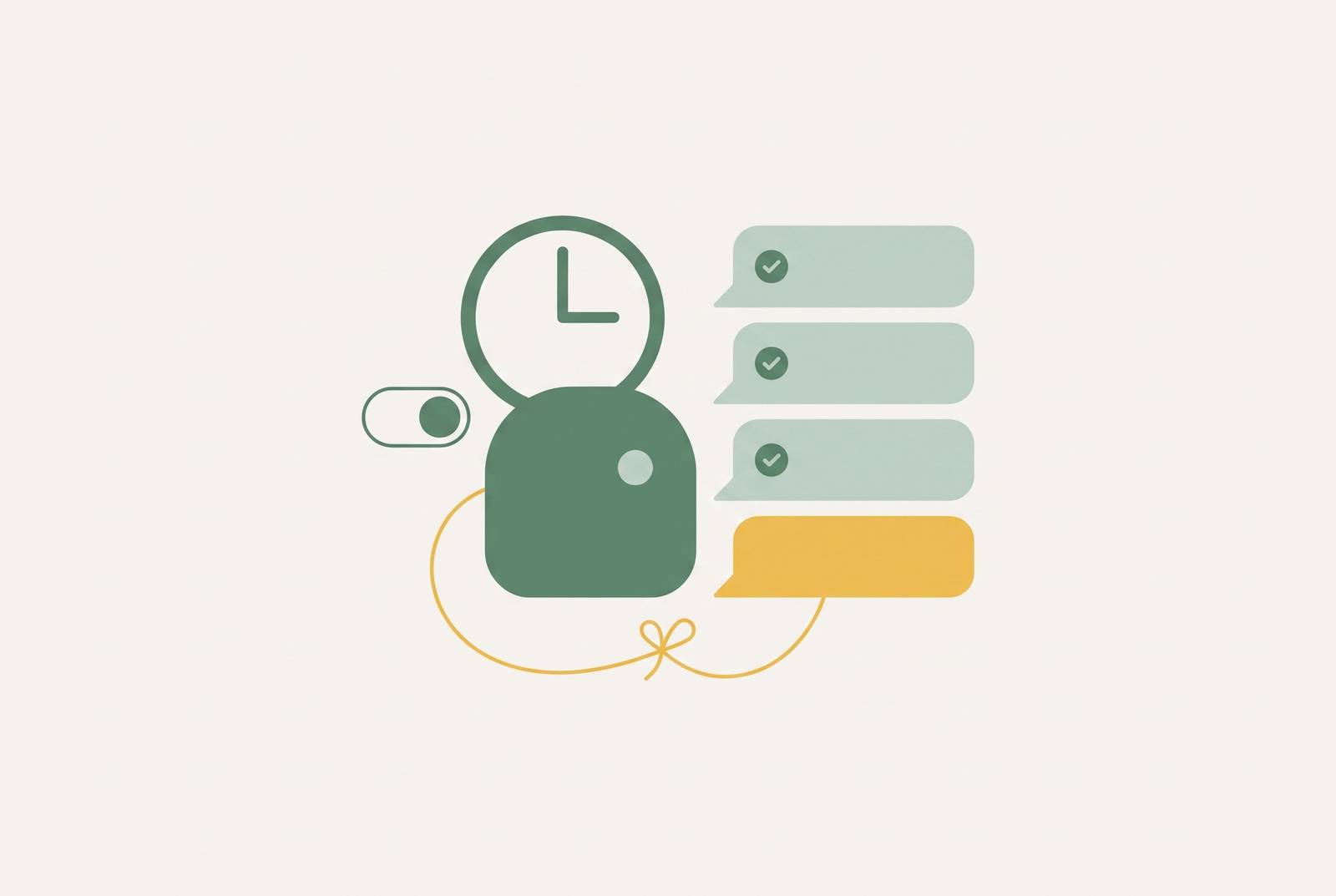
Pencil is an in-chat AI assistant for following up on group plans without making the organizer track every unanswered message. The value of “set it once” is persistent commitment tracking. The most trustworthy model gives the AI the work of noticing and drafting while leaving the organizer in control of whether a follow-up should be sent.
Why group chats are where plans begin but rarely where they land
A group chat makes it easy to suggest dinner, a birthday get-together, or a weekend away. Several people respond warmly, and for a moment the plan feels almost settled. Then the conversation moves on, or simply stops. Nothing has necessarily gone wrong between the people involved. The thread has just reached the boundary between talking about a plan and making a decision.
That boundary is easy to miss because enthusiasm looks like progress. A positive reaction acknowledges an idea, but it does not establish availability or commitment. Meanwhile, everyone in the conversation shares the job of taking the next step. Each person has reason to expect someone else to ask the next question, especially when pushing could make them look too eager. The chat preserves what people said without assigning anyone responsibility for resolving what they left open.
People can dip in and out of a conversation, but a plan will eventually need firm answers. A thread can hold both kinds of exchange, but it cannot turn one into the other on its own.
What the organizer is actually doing when a plan stalls
Consider a birthday dinner thread in which several friends acknowledge the invitation, some give time preferences, and others say nothing. Most people in the thread just read a message and perhaps reply. The organizer has a different job entirely. They must distinguish acknowledgment from acceptance, remember whose answer remains outstanding, and retain that distinction across hours or days. Each new message requires another small update to that mental ledger.
The unanswered messages also create an interpretive burden. Silence might mean someone forgot, is choosing between other plans, or feels awkward about answering. From the organizer’s position, those possibilities can look identical to disinterest. A follow-up therefore requires more than recalling a missing response. They have to decide whether another message will feel helpful, controlling, or needy.
Sending the group another message takes a fresh push, while sending messages one by one means the organizer has to approach each person who has stayed silent. Even a poll needs someone to notice that some answers are still missing. The rest of the group experiences a low-effort conversation because one person absorbs the work of keeping it actionable.
Why the follow-up moment is the specific point where plans die
A plan is at risk after the first excitement, when someone has to give it a second push to keep it moving. By then, the idea has already done its work. People know what is being proposed, but the missing answers still need attention. If the organizer must detect the gap, compose the message, and absorb its social cost, the plan depends on their willingness to do all three again.
Waiting for a date that suits everyone can prolong this gap until the plan loses momentum. An assistant that reports “three people haven't committed yet” makes the unresolved state explicit. That does not solve everyone’s availability. The organizer can respond to an identifiable gap without reconstructing the conversation.
Contact management software can surface people who need attention and draft outreach, reducing follow-up to a human approval and relieving the organizer of a fresh exercise in memory and will. Applied to group planning, the same division of labor removes noticing and drafting from the organizer’s recurring workload. A better calendar alone cannot do that.
What "set it once" actually means — the state an AI holds so the organizer doesn't have to
The setup establishes the plan, the group, and the conditions for follow-up. From there, a state-aware assistant must retain who joined the original conversation, who acknowledged the proposal, who gave a time preference, and who remains silent. It also needs to retain when participants had a chance to respond. This is a social graph with timestamps. A list of names cannot distinguish someone who has not answered from someone who has not yet had a reasonable opportunity.
That record must change as the conversation moves on. An acknowledgment is not necessarily a commitment, and a time preference may still leave participation unresolved. The assistant’s task is to preserve those distinctions without requiring the organizer to reread the thread. The tracking continues until the participants have committed or the organizer calls the plan off.
This is where the model differs from iOS 18’s Send Later feature. Send Later holds a message for delivery at a chosen time, while commitment tracking holds an unresolved task whose state can change before any message is needed. The trigger is different. A timed message follows the clock. A state-aware follow-up depends on what remains unanswered after a reasonable window.
“Set it once” therefore describes the monitoring burden. Approval can remain with the organizer without requiring them to supervise the thread.
How the AI decides when and how to surface a nudge
Detecting an unanswered message is easier than judging whether drawing attention to it will help the plan. A premature nudge can feel pushy, while a late one can arrive after interest has dissipated. The assistant needs to use the conversation’s rhythm to judge when a silence warrants follow-up.
The most useful first recipient is the organizer. A prompt such as “three people haven't weighed in; want me to follow up?” makes the missing answers visible and offers a single next step. It does not force a confrontation with the silent participants. Drafting the message and queuing it for approval removes the work of generating outreach while preserving human judgment about whether it belongs in the conversation.
Someone may be traveling, overwhelmed, or choosing to wait, and the AI cannot fully understand what is going on for them. A gentle draft that leaves room to decline is preferable to a demand for a binary answer. Remembering that a person replies slowly or that a group prefers weekend plans can also help the assistant time its nudges. Those details help shape the nudge, but how someone tends to reply cannot tell the assistant for sure what they intend.
What iMessage's native scheduling can and cannot do for group follow-up
Send Later supports a clear, bounded use case. It allows an iMessage to be scheduled up to 14 days ahead, making it suitable for a birthday wish or a morning reminder whose timing is already known. Apple states that scheduled messages are encrypted and stored on its servers until they are sent, and that delivery works even when all the sender’s devices are offline. Apple’s iPhone User Guide also states that recipients do not know a message was scheduled.
The feature is limited to one-time iMessage messages, with SMS or MMS and recurring messages unsupported. It also has no awareness of whether anyone responded. When the task is to deliver known text at a known time, native scheduling fits. When the task is to determine who still needs a follow-up, an additional layer must track the conversation.
The recipient experience offers a useful foundation for that layer. Scheduled delivery can remain unobtrusive, but deciding whether a follow-up is needed requires more than invisible timing.
How an in-chat AI assistant fits into the group conversation without disrupting it
Pencil places the follow-up layer inside the conversation where the plan begins. The organizer sets it up in the thread, and it holds the participant list, tracks responses, and follows up at the appropriate moment. Participants do not need to leave the discussion for a separate planning tool. Staying in the thread makes it easier to go from showing interest to giving the answer the plan needs.
The experience depends on restraint as much as presence. An assistant is useful when it brings an unresolved commitment back into view and keeps the planning task from disappearing beneath the conversation. Once the plan lands on the calendar, it should recede rather than create another ongoing obligation for the group.
Editable contact preferences provide a way to retain relevant context. A preference for weekends or a tendency to respond slowly need not be explained anew for every plan. Because those preferences are editable, the organizer can shape the context the assistant uses.
Why privacy is the right frame for evaluating any AI that holds a social graph
Commitment tracking needs information about people and their relationships. An assistant following a birthday dinner knows who was included, who expressed interest, and who has not answered. Availability adds another layer of personal context. These are not merely scheduling inputs stripped of social meaning, so privacy belongs in the evaluation from the beginning.
Users should ask whether conversation content trains future models, how sensitive personal information is handled when it appears in a request, and how access can be revoked. Those questions need specific answers. A useful planning feature does not, by itself, establish how every part of the service handles data.
Pencil’s availability sharing offers one concrete boundary. Group participants can see when someone is free rather than the private event details explaining when they are busy. That limits what is revealed during coordination without making a blanket claim about data handling or cross-chat isolation. It addresses the information the group needs while withholding details it does not need to make the plan.
Privacy also intersects with the decision to send. A silence may reflect a strained friendship or a complicated situation that the assistant cannot read. Letting the organizer approve the message leaves room for what they know about those relationships, which even a well-kept record cannot fully capture.
What changes when the follow-up burden is off the organizer's plate
When monitoring and drafting no longer depend on the organizer’s initiative, a plan has a better chance of surviving a quiet thread. The person who suggested the plan no longer has to be the only one who remembers it. Their role shifts from repeatedly asking for attention to deciding whether a prepared follow-up is appropriate. That is a smaller and less emotionally demanding task than starting the process again.
For participants who have not committed, a gentle nudge can also make responding easier. It can reopen the question without the implied accusation that a friend has been waiting impatiently. Human approval remains important here because lightness depends on context as well as automated wording. The aim is an invitation to answer freely.
A person who needs weekends or often travels does not have to keep restating the same context, and the organizer does not have to retain it unaided.
Fewer plans need to end as warm reactions followed by silence, and fewer friendships need one person to supply all the follow-through. Once the invitation is sent, the assistant can disappear from attention. What remains is the birthday dinner on the calendar and the people who said yes.