Stop Babysitting the Group Chat and Let AI Hold Everyone Accountable to the Plan
Pencil nudges the quiet friends so no one person has to.
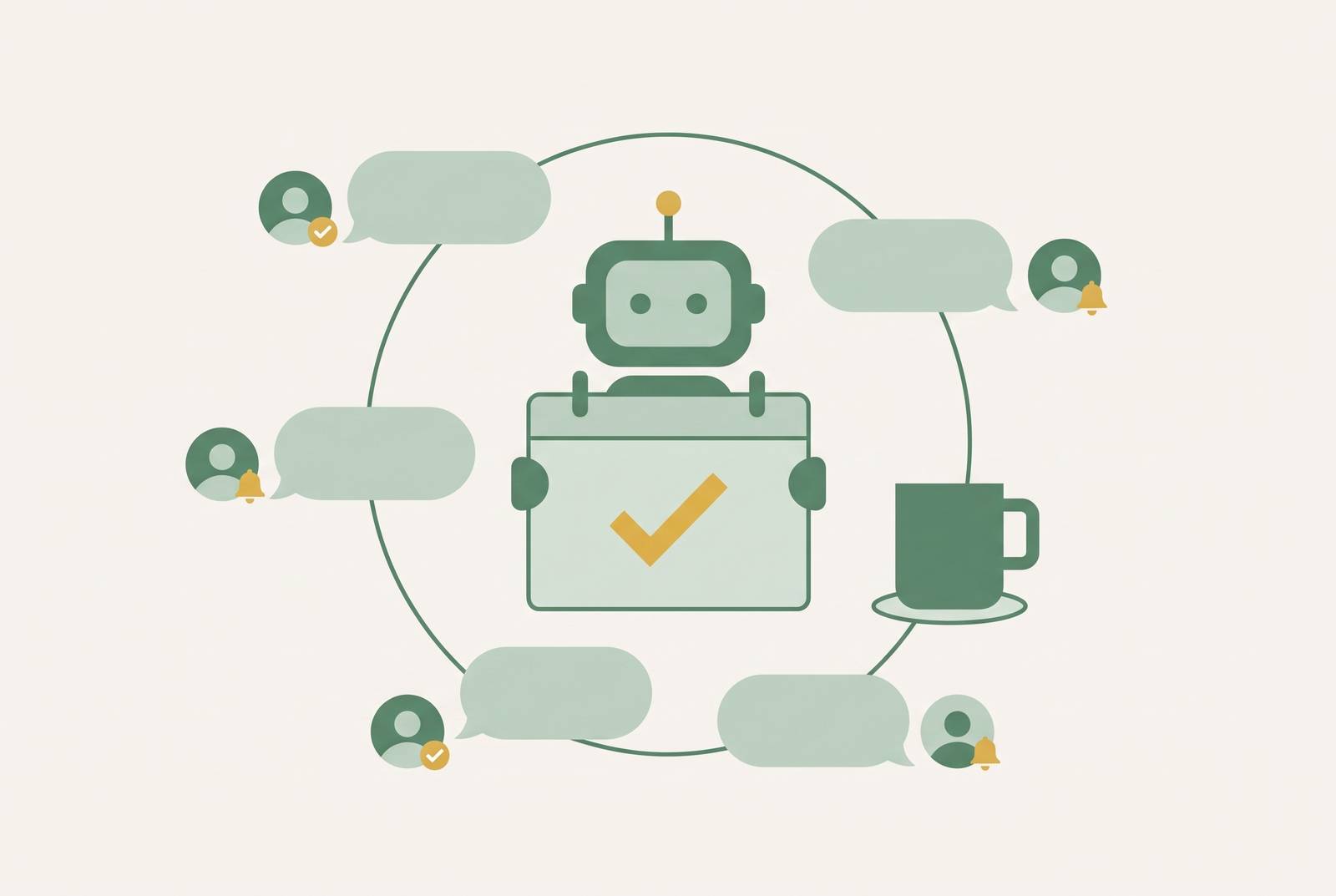
Pencil is an AI assistant that follows up on plans inside iMessage group chats, automating availability collection, deadline enforcement, targeted reminders, and calendar invites. It tackles the main reason group plans stall, people want to get together but are reluctant to keep chasing replies. The value of an in-thread assistant is that it can keep a commitment moving without making one friend responsible for every nudge.
Why group chats keep failing at the one job everyone asks them to do
Group chats put proposals, replies, and decisions into the same stream. That works for conversation but poorly for coordination, because a message has no built-in status that distinguishes a suggestion from a confirmed arrangement. A suggested date looks the same as a joke. As new messages arrive, the information needed to settle the plan moves further from view.
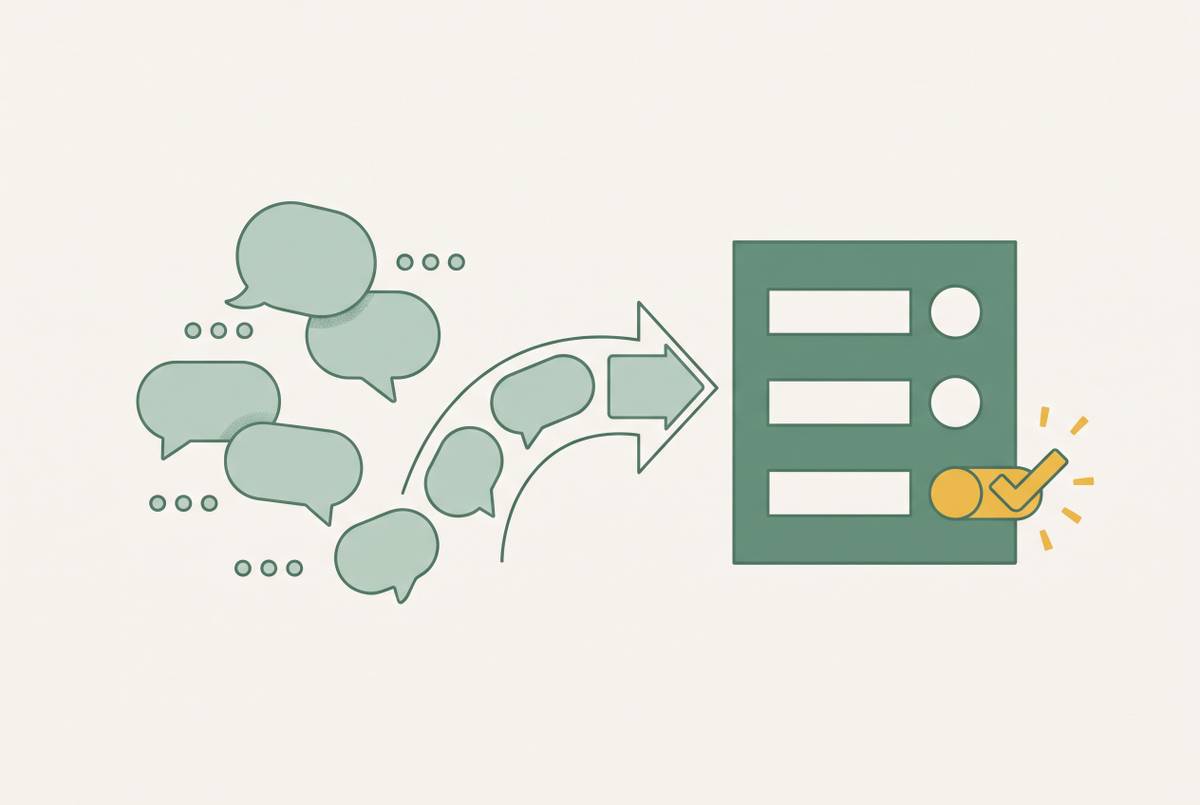
Replies also arrive in forms that cannot be reconciled without work. One person says “weekends work,” another says “not the 12th,” and someone else sends a voice note or reacts with a thumbs up. Those responses are not equivalent commitments. Someone must interpret each one, scroll back for earlier constraints, and assemble an answer that the thread itself does not maintain.
Even when everyone has replied, the group can still be stuck. People wait for others before committing, while public responses can encourage apparent flexibility that conceals real constraints. Moving polls, RSVPs, and invites into separate apps adds another handoff, with some participants following and others remaining in the chat. There is no single source of truth. The result can be weeks of discussion followed by either no event or a last-minute arrangement with part of the group missing.
The real reason nobody pushes the plan forward
The person who reconciles those replies also inherits the job of securing the missing ones. That is a different kind of work. Tracking availability requires attention, but asking a friend again requires a judgment about whether the reminder will feel helpful or pushy. The guilt of becoming the nag can make a reasonable follow-up feel harder than the scheduling task itself.
A reminder sent too early can seem impatient, while one sent too late may arrive after people have lost interest. Meanwhile, the organizer must track changing answers and revise options without knowing when the remaining replies will arrive. Groups rarely rotate this role, so the same person can end up managing the entire loop each time.
The difficulty is compounded by the ambiguity of agreement. A chat “yes” is not a formal RSVP, and an optimistic response two weeks earlier may no longer reflect what someone can manage the night before. The thread cannot show that change on its own. Because follow-up remains optional and distributed, responsibility dissolves, and silence can be mistaken for agreement until the opportunity passes.
What accountability research says about why the nudge matters so much
A specific person who provides reminders keeps a stated intention visible when competing demands would otherwise displace it. A reminder reconnects the earlier decision to the moment when something must actually happen.
Gollwitzer and Sheeran’s meta-analyses on implementation intentions show several ways to close the intention-action gap. Follow-up should not be presented as the single universal cause of completed action, but neither should it be dismissed as administrative overhead. In scheduling, it provides a way to revisit an intention before treating it as a settled commitment.
This is why reminders, deadlines for replies, and requests to confirm belong in the steps of making a plan. They should check whether people still agree and settle what has yet to be decided. If that function is necessary but nobody wants to perform it, the unanswered question is who can take responsibility without becoming the group’s manager.
What AI can follow up on plans so nobody has to chase?
An AI inside the thread can do that job without having to worry about its place among friends. It has no need to be liked and feels no awkwardness about asking for an outstanding answer. That changes who owns the friction. The friend who suggested dinner can simply be the one who started it, without having to send every reminder afterward.
The useful capability is the ability to send the follow-up a human would otherwise postpone, keep a deadline visible, and ask for confirmation while the plan still has momentum. Timing remains part of that job. For a small, casual plan, a reminder needs to arrive far enough ahead for people to prepare but close enough for them to confirm they can still attend.
A machine-issued message about an unconfirmed dinner may feel impersonal in a conversation built around friendship. But the relevant alternative is often silence. A named, acknowledged AI can absorb the awkwardness of asking without attaching it to one friend, while the group retains the human purpose of the plan.
What it actually looks like when AI lives inside the conversation instead of next to it
The distinction becomes concrete when a dinner proposal appears in an ordinary conversation. In the in-thread model, the AI is present where the proposal forms, rather than waiting for someone to move the task elsewhere. It surfaces availability and asks the question needed to advance the decision. The conversation remains the working space for the plan.
When a participant has not answered, the assistant follows up there instead of leaving the organizer to decide whether to push again. That reminder has context because the proposal and the outstanding decision are part of the same exchange. Once a time is agreed, the calendar invite can be sent from inside the conversation. Nobody has to reconstruct the settled details in a separate scheduling step.
An external availability link can still improve on an open-ended question. It gives people a set way to reply that ordinary chat lacks. But people must leave the conversation to reply, and the link can get buried under later messages. The in-thread model removes that particular handoff, connecting the proposal, the missing answer, and the resulting invitation without requiring the group to keep moving between tools.
Location therefore shapes both the accountability function and the interface. A reminder helps more when the group can see what still needs to be decided without looking elsewhere to catch up. An assistant beside the conversation may help someone put information in order. An assistant inside it can participate in the follow-through that the conversation otherwise leaves unassigned.
How Pencil handles this inside iMessage group chats
Pencil applies this model to iMessage group chats. Its specified functions include collecting availability, enforcing deadlines, following up with people who have not confirmed, and sending calendar invites. These are the steps between proposing an event and establishing a commitment. They are also the steps most likely to leave a human organizer repeatedly asking for answers.
Its privacy distinction is equally specific. Group participants see availability while the details of what someone is doing remain private. That separates the information needed to find a shared time from the personal information behind an occupied slot.
The choice of iMessage follows the same design logic. It is built into the phone and already serves as a place where plans form, so Pencil brings scheduling into that existing exchange. Its role here is defined by concrete coordination tasks. Those capabilities should not be expanded into claims of perfect memory, universal calendar access, or guaranteed bookings.
The distinction also limits the recommendation appropriately. Pencil is a fit for follow-up on group plans in iMessage. The described capabilities do not establish a separate workflow for sending follow-up messages after professional meetings. An assistant’s usefulness for “AI follow-up” depends on the commitments and conversation it is actually designed to handle.
The practical steps that turn a drifting thread into a confirmed plan
Give the plan a sequence, whether follow-up is manual or automated. Begin with one specific idea and a bounded date range, such as dinner on one of three Saturdays. Specificity gives people a decision they can answer. An open-ended suggestion leaves both the activity and its timing available for indefinite discussion.
Next, collect availability privately instead of asking everyone to tell the group how flexible they can be. This takes away some of the pressure to match someone else’s answer and gives quieter people room to say what they can actually manage. Then name a voting deadline explicitly. A request to respond by Friday gives the organizer a point at which discussion can become a decision.
Keep the decisions in order as replies arrive. Settle the date first, then the venue, then the remaining logistics. Opening every variable at once makes each answer conditional on another unresolved choice. A group can discuss several possibilities enthusiastically without moving any one of them toward completion.
When the deadline arrives, pick a date even if some people have not responded, announce it as final, and send a real invitation with a clear time and place. This is the transition from possibility to commitment. It requires making the arrangement explicit enough that each person can accept it or acknowledge that it does not work.
Afterward, follow up once with the people whose confirmations are still missing. Keep the request specific rather than sending another message to the whole group, which adds noise for people who have already answered. Pencil automates availability collection, deadline enforcement, targeted follow-up, and the invitation within this sequence. The planning logic remains usable without it. The automation removes the recurring manual work from the parts most easily deferred.
Why the plan that lands on the calendar feels different from the one that almost happened
A stalled plan is a dinner, hangout, or catch-up that might have helped a relationship feel maintained. The unresolved thread can accumulate its own discomfort, as everyone recognizes that the idea is slipping but nobody wants to revive it or formally let it go. That makes it harder to ask everyone to get together next time.
A confirmed time and place remove that ambiguity. People know where they are expected to be, and the organizer no longer has to keep the possibility alive through repeated messages. The best version of an AI scheduling assistant then recedes. Text Pencil, an iMessage bot that sits in the group chat and does the nudging so no friend has to, is one example. Its contribution is complete when the people involved can stop coordinating and start looking forward to seeing each other.