Let the AI Chase the RSVP While You Stay the Fun Friend
Pencil handles the nudging in iMessage so you can just host.

Pencil is an AI assistant that follows up on plans inside iMessage, sharing availability, sending nudges and issuing the calendar invite before stepping back. Its value is not simply fewer messages for the organizer to write. Delegating the chase gives a viable plan the persistence it needs without making one friend responsible for repeatedly pressuring everyone else.
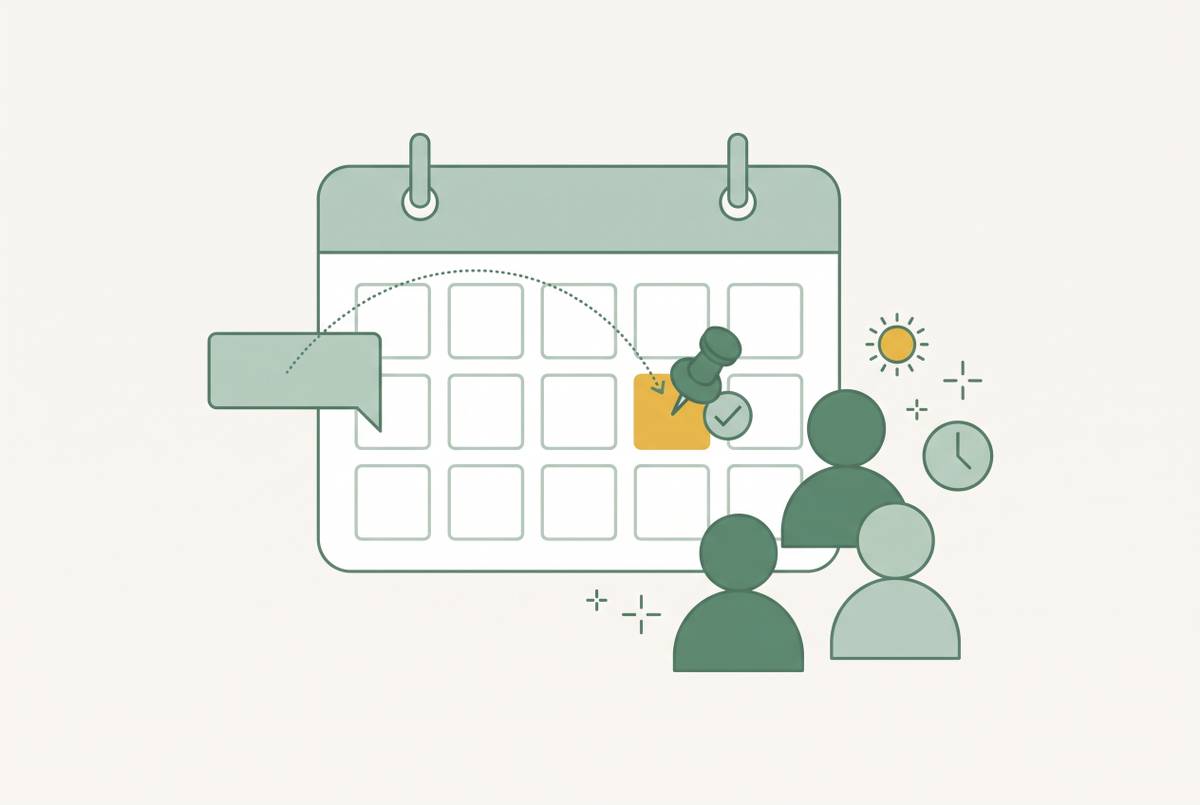
The way to stop being the annoying friend is to hand the chasing to something that isn't you. Pencil follows up on plans inside iMessage, shares availability, sends the nudges and issues the calendar invite before stepping back. Three touchpoints is a reasonable limit, and silence after the third is an answer you can take as one. The persistence gets attributed to the system, so your own messages can stay invitations rather than requests for a reply.
Why plans made in group chats die before they happen
The “hey, something came up” text arrives two days before the gathering, after the date has spent weeks looking settled. Work deadlines have shifted, a child has become sick, or someone no longer has the energy they expected to have. The calendar entry has not protected the commitment. It has only kept a record of what someone meant to do before things changed. Treating that change as flakiness mistakes the fragility of advance planning for a defect in the person.
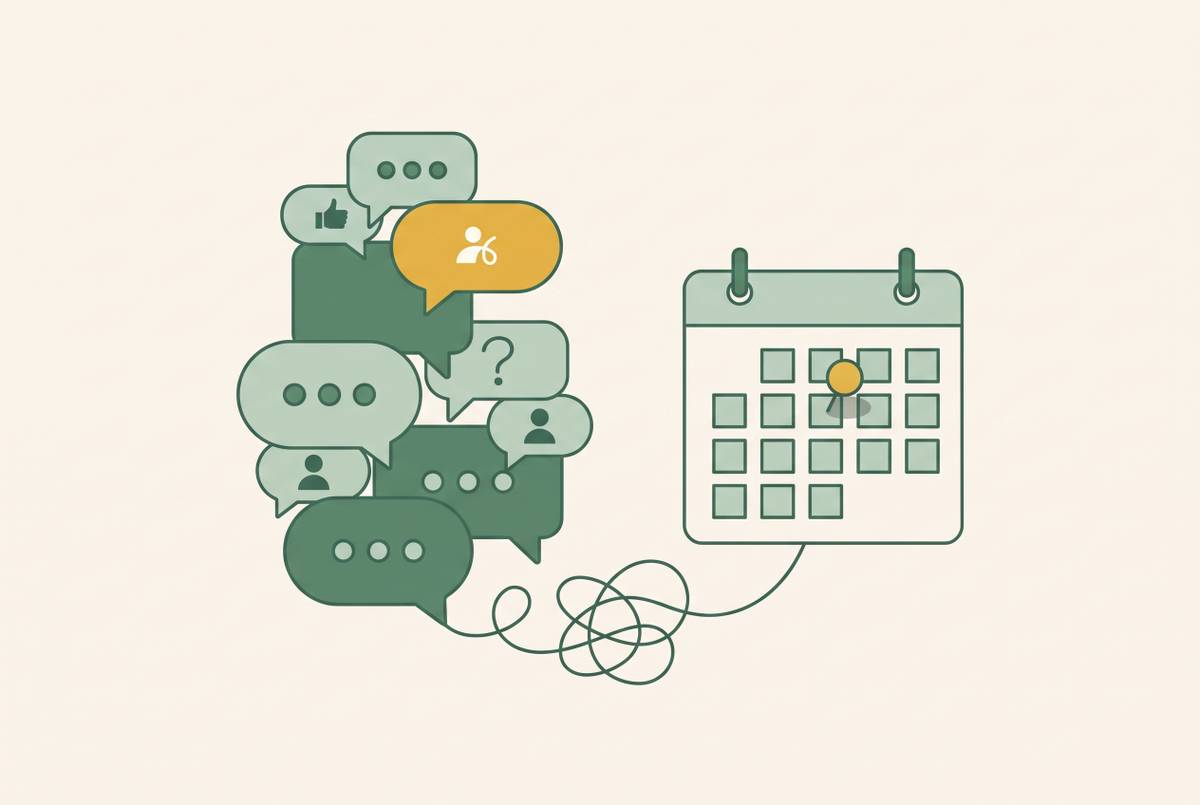
The longer a plan remains a future obligation, the more opportunities there are for circumstances to undermine it. That makes a calendar entry a confidence trap when the group treats it as a guarantee rather than a commitment that still needs follow-through. A plan formed in iMessage that requires a response in email or another app asks people to cross a context gap. Even people who want to come can fail to make that switch. The plan appears agreed upon but still lacks the responses needed to make it happen.
Why nobody in the thread wants to be the one who keeps nudging
Sending the third follow-up to a flaky cousin is difficult because the sender must decide how much pressure the relationship can comfortably absorb. The host wants an answer. Yet another request can feel like an accusation that the earlier messages were ignored, even when the recipient simply meant to respond and became distracted. Coordination work has become a social negotiation.
That discomfort grows when the exchange happens in front of the whole group. The organizer risks appearing needy or controlling, while the recipient is visibly being asked to account for their silence. Nobody wants to inherit that role indefinitely. When everyone wants to get together but nobody wants to do the chasing, the thread can go quiet without anyone deciding to give up on the plan. Reluctance creates a vacancy at precisely the point where persistence is needed.
A group reminder seems to offer an escape because it avoids singling anyone out. However, it also avoids assigning the response to anyone in particular. A message addressed to forty people can function as a message addressed to nobody. Each recipient can assume someone else will answer. The organizer has gone through the awkwardness of asking again in front of everyone and may still be missing the RSVP.
What a well-timed follow-up actually does that a group reminder cannot
A useful follow-up gives one person one answerable obligation. It uses their name, asks a closed question and makes clear whose response is missing. The recipient does not need to interpret what the group should do or wait for someone else to move first. That specificity counters diffusion of responsibility. It turns an unresolved conversation into a small decision that belongs to a particular person.
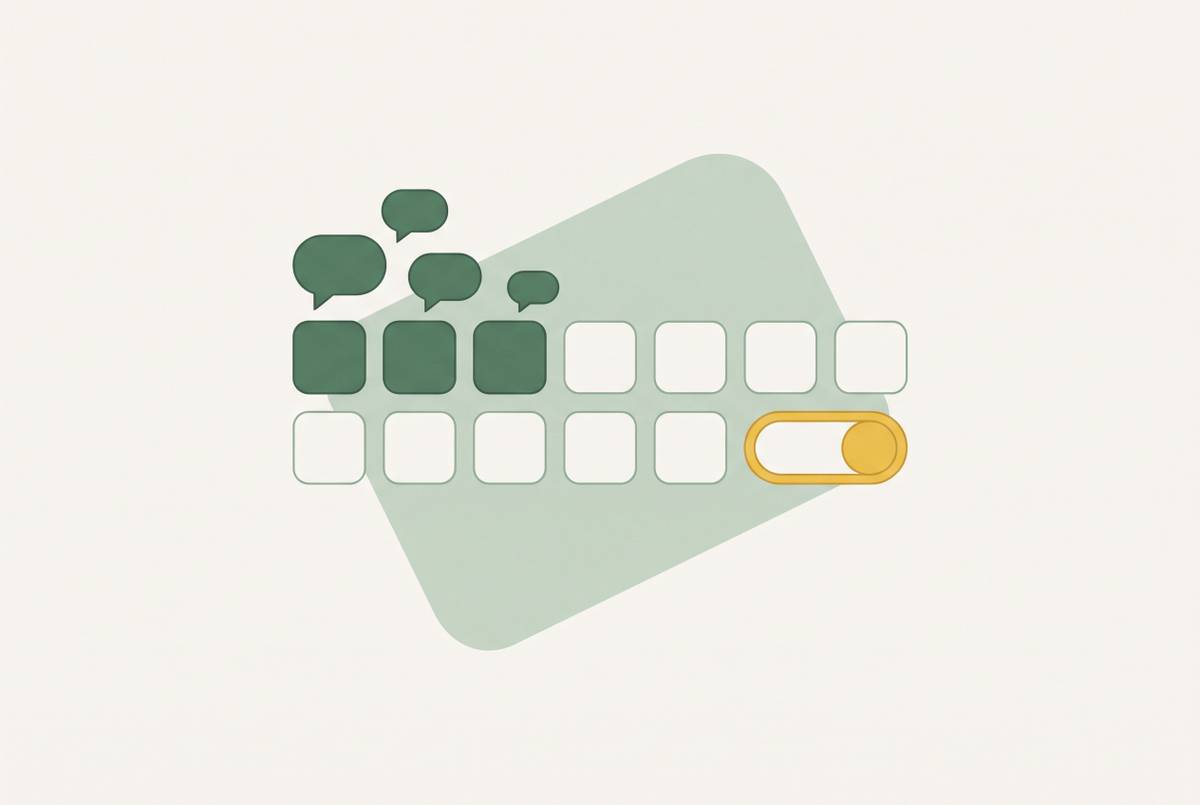
A nudge sent while there is still time to plan can bring someone back to what they meant to do, but one sent after the moment has passed is just another message. Persistence also needs a limit. Three touchpoints provide a bounded range for recovering missed responses without making the chase indefinite. Fewer can miss people who want to come but got distracted, while more can teach people to ignore the sender and put pressure on the relationship.
Peter M. Gollwitzer and Paschal Sheeran’s 2025 review in the Annual Review of Psychology shows that if-then planning improves follow-through by specifying when and where an action will happen. A clear nudge at the right time can likewise bring someone back to a decision about what they meant to do. The distinction is important for interpreting the evidence. Research on planning supports the value of specificity, but it does not establish that every reminder works or that an AI message guarantees attendance. The case for automation rests on reproducing the useful properties of follow-up.
What AI assistant follows up on plans inside iMessage without anyone leaving the conversation
Pencil provides a concrete example of in-chat AI coordination. It shares availability, sends the nudge and, when the plan lands on the calendar, sends the invite before stepping back. The follow-up reaches the conversation where participants already expressed their intention. Nobody needs to move the planning exchange elsewhere. This is a native fit for the task because the unresolved decision and the request to resolve it remain in the same channel.
Apple’s native text scheduling in iOS 18 offers a narrower option for a message whose timing is already known. It allows an iMessage to be scheduled a limited time ahead, but it does not support scheduled SMS messages to Android users. Scheduling and coordination are different tasks. The former arranges delivery of a message, while the latter involves moving a plan through availability, follow-up and an invitation. That distinction is more useful than treating every delayed message as an AI assistant.
As more agents work inside iMessage and SMS, they can do work with several steps in the thread without anyone having to download another app. Pencil illustrates the social-planning use case described here. In particular, these capabilities do not establish support for sending follow-up messages after professional meetings. The relevant comparison is between a scheduled prompt and an assistant that helps complete the coordination already underway. Its endpoint is the invitation.
How do I stop being the annoying friend who keeps following up on group plans?
The organizer who arrives at a gathering should be able to occupy the role of host, rather than remain the person who spent the week extracting answers. Repeated chasing can blur those roles. The friend who wanted everyone together becomes the person others link with deadlines, unanswered questions and the next reminder. The work is useful, but its emotional residue is not. Over time, persistence on behalf of the group can start to feel like a personal habit of nagging.
Delegating the nudge separates that necessary work from the relationship in which it occurs. When the AI sends the third message, the persistence is attributed to the system rather than entirely to the friend who proposed the gathering. The organizer has not stopped taking responsibility. They have assigned a bounded coordination task to a tool so that their personal contact need not consist mainly of requests for an answer. The invitation can remain an expression of wanting to see someone.
Burns et al.’s work on interdependent minds found that how people depend on and interact with one another shapes how things turn out between them. That finding supports attention to how shared tasks are managed. It does not directly prove that AI reminders make friendships better. The narrower argument is that the mechanics of coordination can make an interaction feel satisfying or burdensome, and repeated personal chasing is part of those mechanics. Removing that burden has value only while the recipient remains free to decline.
The strongest objection follows from that condition. If someone needs repeated prompting, perhaps reluctance explains the silence, with distraction another possibility. An AI cannot tell which reason explains the silence just by asking again. Its useful role is to reduce the social cost of a limited request. A friendship is protected by a clean choice.
What relationship memory adds when the AI already knows who tends to go quiet
Organizers already distinguish between different kinds of silence. They know the family member who commits late but reliably attends, the colleague who disappears under deadline pressure and the friend whose standing Friday commitments make certain suggestions impractical. Those patterns change how a reminder is understood. A second nudge can be considerate for one person and unnecessary for another. Generic reminders discard the context that makes those distinctions possible.
An AI with contact-level memory can retain what the user has shared across conversations rather than reconstructing the relationship from each new thread. That is different from scraping profiles. When making social plans, it helps to know when people are free, how they tend to reply and what usually gets in the way. Memory can make the follow-up more considered by preserving those distinctions. Pencil’s recall and support for the capabilities discussed here remain outside the scope of this account of contact-level memory’s value.
The industry’s 2026 memory developments point toward persistent context. Google introduced Personal Intelligence into Gemini, while Microsoft’s notice said general availability for Copilot Memory in Microsoft 365 Copilot Chat would start from mid-September 2026 and was expected to reach all users in tenants where Memory is enabled by late October 2026. Grok remembers by default where available, with availability or beta restrictions in the EU and UK because of regulatory constraints. For relationship memory, the decisive control is whether the user can edit what is stored, so that remembered preferences remain correctable rather than becoming fixed assumptions about another person.
The privacy question that a group-chat AI actually has to answer
A group-chat assistant encounters information about people who never signed up for the service. Their schedules, relationships and messages may be present because another participant introduced the tool. That makes privacy a question of whose information is being processed. The concern is legitimate and specific. Convenience for one participant does not by itself establish consent from everyone else.
A Stanford study published in 2025 found that all six companies it examined used chat data by default to train their models, with some retaining it indefinitely. The study also identified practices including de-identification and human review of transcripts. Those findings have a defined scope. They justify scrutiny of chat-data handling, but they do not establish Pencil’s training or retention practices. Applying them to an unexamined product would replace one unsupported assurance with an unsupported accusation.
For a group considering an assistant, the practical questions concern what enters the system, whether conversations reach training infrastructure and what control participants have over that use. Pencil’s product description provides narrower, concrete answers about its coordination interface. Group participants see availability rather than private event details, and follow-ups can be disabled in settings. Those controls address event visibility and continued nudging. They do not, on their own, answer every question about training, retention or participant consent, and the description does not claim universal calendar access or perfect memory.
When AI follow-up is the right tool and when friction is actually the signal
AI follow-up earns its place when the plan is viable and the missing element is a timely request for an answer. That could be the dinner everyone wants but nobody is nudging, or the coffee invitation buried under a busy week. In both cases, intention exists but follow-through has stalled. A direct message can reconnect the two. The tool is addressing a coordination gap rather than attempting to create interest that was never there.
Follow-up helps less when a plan is too far ahead for people to know how much time and energy they will have to see others. Reminders cannot make an unworkable commitment viable, and silence can reveal more than a missed notification. Follow-up serves as a bounded test. Confirmation after the second message suggests the plan needed help crossing the gap, while no response after three is reason to take the quiet as an answer. Memory and automation do not remove the need for that judgment.
The goal is more plans that happen. A useful assistant leaves room for both a willing yes and an unforced no. When coordination succeeds, the calendar invite lands and the AI steps back. The organizer can return to being the person who wanted everyone together, and the friendship is what remains.